Multimedia • Reference • Religion • Travel |
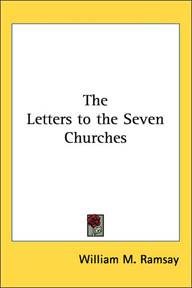
 The Letters to the Seven Churches Sir William M Ramsay 
 Description From The Publisher: This edited and updated edition of Ramsay's classic work has, except for the omission of a lengthy poem in Chapter 14, left the original material intact. The language and style were updated for the modern reader, modern place names were used, and a modern translation is the source of scripture citations. Notes especially have been updated and corrected, and fuller bibliography is provided whenever possible. Photographs and diagrams from the original are retained. Anyone interested in Asia Minor or the book of Revelation will find this resource invaluable.Reviews ". . . Sir William Ramsay's exposition of the letters to the seven churches of Asia has continued to attract readers for the greater part of a century—and it is likely to remain of interest well into the next century. As the first Professor of Classical Archaeology at Oxford University, Ramsay pioneered the study of antiquity in what is today western Turkey. He went on to devote the latter part of his life to applying what he had learned to the study of the New Testament in a most fruitful manner. More recent scholars, such as Colin Hemer, have brought Ramsay's research up-to-date in the light of more recent research; however, it is always good to go back to the fountainhead of such a study. Ramsay's work remains a classic in the field and should be a part of every Bible scholar's personal library."
 Reader's Index Send us your favorite quotes or passages from this book. About the Author Sir William M. Ramsay (1851-1939) was a classical scholar and archaeologist whose work in Asia Minor, Italy, and indeed throughout the ancient Mediterranean influenced generations of New Testament scholars. In addition to the present volume, he is perhaps best known for the Church in the Roman Empire before A. D. 170 (1893) and St. Paul the Traveller and Roman Citizen. The impact of his work in New Testament archaeology cannot be underestimated.Table of Contents
1. Writing, Travel, and Letters Among the Early Christians
| |||||||
  Copyright ©1996-2016 CenturyOne Bookstore. All Rights Reserved. All prices subject to change and given in U.S. dollars. Your purchase from CenturyOne.com will assist the CenturyOne Foundation in providing funding for various archaeological and research projects which seek to provide more information about the period of the First Century C.E., the origins of Christianity and the world of the Bible in general. All materials contained in http://www.centuryone.com are protected by copyright and trademark laws and may not be used for any purpose whatsoever other than private, non-commercial viewing purposes. Derivative works and other unauthorized copying or use of stills, video footage, text or graphics is expressly prohibited. |